Sikandra Fort
Architectural Building, Historic Place
Visit length
2.0h
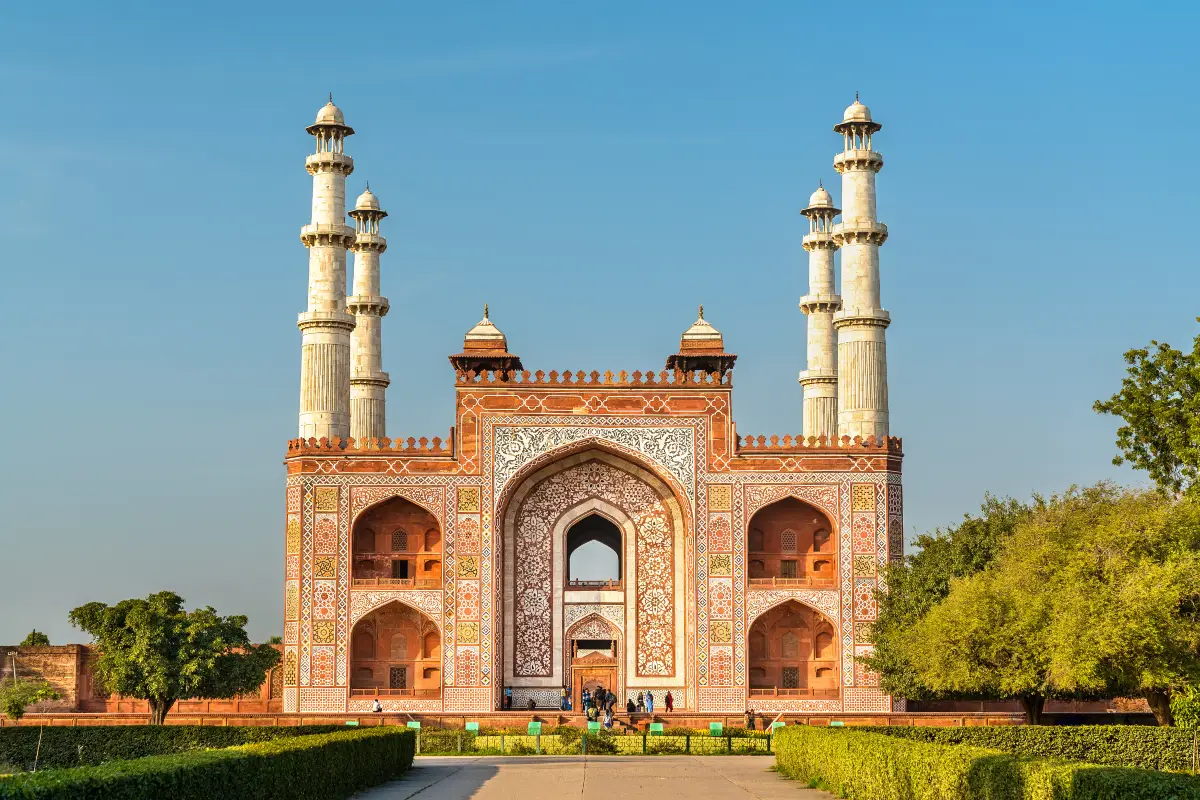
Sikandra Fort, more accurately Akbar’s Tomb, is less a fortress than a mausoleum — a grand statement of an emperor’s vision. Akbar himself chose the site and began construction, blending motifs from Hindu, Christian, Islamic, Buddhist, and Jain traditions to reflect his secular outlook. Completed by his son Jahangir in 1613, the five‑storey structure rises like a truncated pyramid, with red sandstone on the lower levels and pure white marble crowning the top. The surrounding 119 acres of Charbagh gardens are alive with peacocks, monkeys, and antelopes, creating a sanctuary where history and nature coexist. The tomb’s gateways, cloisters, and inlay work showcase Mughal artistry at its peak, while the serene atmosphere makes it one of Agra’s most contemplative sites.
 Quiet rest
 Learn new
Photos
Contacts and Location
Mon
06:00 AM - 6:00 PM
06:00 AM - 6:00 PM
Tue
06:00 AM - 6:00 PM
06:00 AM - 6:00 PM
Wed
06:00 AM - 6:00 PM
06:00 AM - 6:00 PM
Thu
06:00 AM - 6:00 PM
06:00 AM - 6:00 PM
Fri
06:00 AM - 6:00 PM
06:00 AM - 6:00 PM
Sat
06:00 AM - 6:00 PM
06:00 AM - 6:00 PM
Sun
06:00 AM - 6:00 PM
06:00 AM - 6:00 PM


Not provided

Not provided

6XC2 C53, Tomb of Akbar The Great Area, Sikandra, Agra, Uttar Pradesh 282007, India
Map