Tomb of Akbar
Historic Place
Visit cost
$4.0
Visit length
2.0h
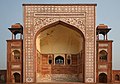
The Tomb of Akbar is not just a mausoleum — it is a statement of an emperor’s vision. Built between 1605 and 1613, Akbar himself chose Sikandra as his final resting place and oversaw much of its design before his death. Unlike most Mughal tombs that face Mecca, this one faces the rising sun, symbolizing Akbar’s secular outlook and openness to multiple faiths. The five‑storey structure rises like a pyramid, blending red sandstone with intricate marble inlays, while the top floor — entirely white marble — houses the cenotaph in elegant simplicity. The surrounding Charbagh gardens are alive with antelopes, monkeys, and peacocks, making the site feel less like a graveyard and more like a living sanctuary. Walking through its grand gateways, you sense both imperial power and personal humility — a rare combination that makes Akbar’s Tomb unique among Mughal monuments.
 Quiet rest
 Learn new
Photos


Contacts and Location
Mon
06:00 AM - 6:00 PM
06:00 AM - 6:00 PM
Tue
06:00 AM - 6:00 PM
06:00 AM - 6:00 PM
Wed
06:00 AM - 6:00 PM
06:00 AM - 6:00 PM
Thu
06:00 AM - 6:00 PM
06:00 AM - 6:00 PM
Fri
06:00 AM - 6:00 PM
06:00 AM - 6:00 PM
Sat
06:00 AM - 6:00 PM
06:00 AM - 6:00 PM
Sun
06:00 AM - 6:00 PM
06:00 AM - 6:00 PM


Not provided

Not provided

Tomb of Akbar The Great Area, Sikandra, Agra, Uttar Pradesh 282007, India
Map